







The world has witnessed some rare sightings in the last few months.
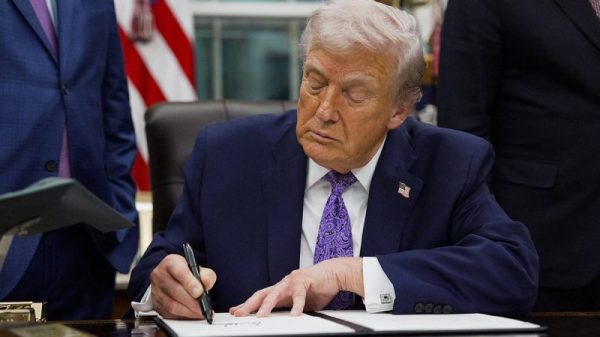
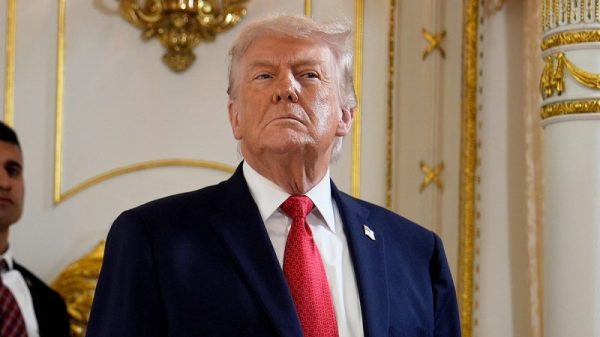
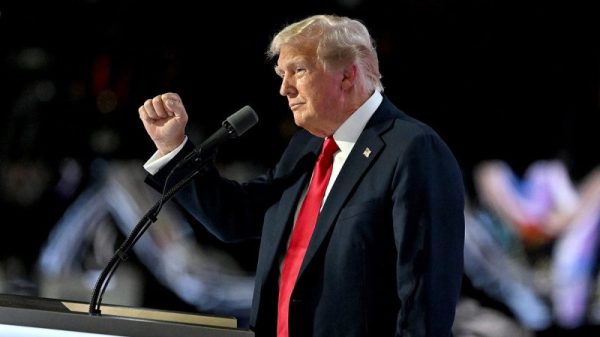
US President Donald Trump’s suggestion that Washington could “buy” Greenland triggered outrage among European allies, who were subsequently threatened with tariffs by the United States.
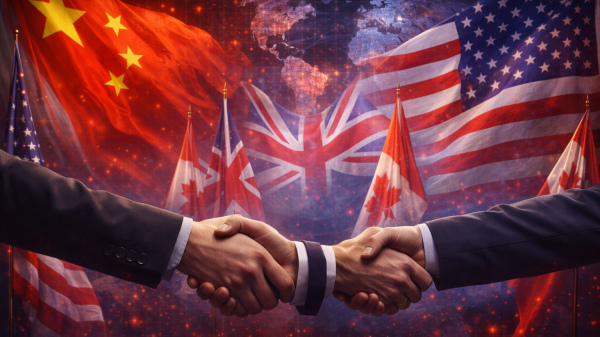
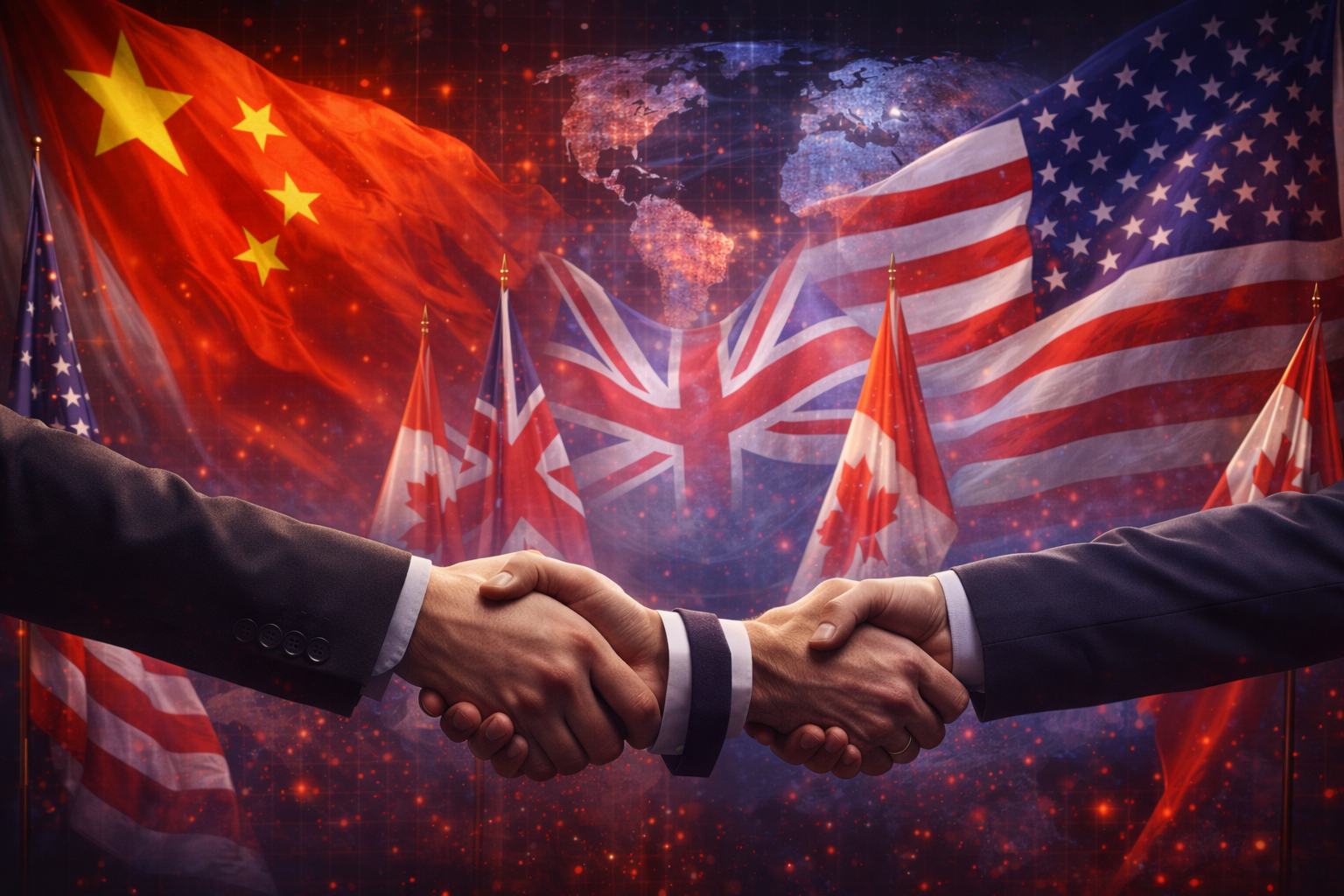
Soon after, Canadian Prime Minister Mark Carney travelled to China — the first visit by a Canadian leader since 2017 — followed by UK Prime Minister Keir Starmer’s trip to Beijing, marking the first such visit by a British prime minister since 2018.
Since December, China has also hosted a steady stream of Western and Asian leaders, including French President Emmanuel Macron, South Korean President Lee Jae-myung, Irish Prime Minister Micheál Martin, and Finnish Prime Minister Petteri Orpo.
Analysts say the diplomatic outreach reflects growing economic uncertainty, partly fuelled by Trump’s tariff-driven trade policy and underscores a perceptible erosion of US influence in global affairs.
“It’s too early to say whether we are seeing a complete change in the global order, but surely the importance of the US has come down quite significantly,” Biswajit Dhar, trade economist and former professor at the Jawaharlal Nehru University (JNU) in India tells Invezz in an interview.
Dhar adds that China derives its attractiveness also from President Xi Jinping’s relentless backing of globalisation, even as Trump is seen championing his protectionist ideology.
According to Dhar, the world is experiencing a degree of geopolitical “churn” rarely seen in modern history, with power gradually dispersing from a US-centric system toward multiple centres of influence — a form of multipolarity in its truest sense.
Europe, meanwhile, appears to be at a strategic crossroads.
Its resistance to Trump’s Greenland ambitions, followed by its expanding engagement with China, suggests that the transatlantic relationship may be entering a period of recalibration.
Excerpts:
Biswajit Dhar
Why is China becoming more attractive to Western powers?
Invezz: With European leaders, Canadian and UK PMs reaching out to Beijing and allies diversifying their economic partnerships, is this simply a response to immediate economic pressures, or does it mark the beginning of a structural shift away from a US-led world order?
Well, it’s a bit too early to arrive at that kind of a conclusion. But surely, China has actually moved out of the shadows of the US and emerged on the big stage.
China was always treated as a pariah and as a non-market economy. There was a lot of reluctance to do business with China.
And the reason that they still hold on to this non-market economy issue was that there was no transparency about the way China deals with partner countries.
And, of course, there’s a great deal of uncertainty in dealing with China, also because China continues to use a whole lot of government support and subsidies.
So the narrative was that China doesn’t deal in a fair manner and indulges in all kinds of unfair trade.
But now this whole pendulum has moved, largely because of the kind of uncertainty Trump has thrown the entire world economy into.
There is absolutely no guarantee that Trump is going to change his erratic ways. He may do something today and might do something completely different tomorrow.
This is something that businesses anywhere just can’t afford.
Businesses depend on a set of predictable rules, and they don’t like this kind of situation where the policies of partner countries swing from one end to the other.
Xi Jinping’s backing of globalisation against Trump’s protectionism
Also, what Xi Jinping has done over the past few years is that he has expressed complete faith in this whole process of globalisation.
This contrast became very sharp even in Trump’s first term, when Trump was talking about isolation and going after partner countries, while Xi Jinping was talking like a senior statesman and expressing complete faith in globalisation and wanting to take the process forward.
So China was professing the virtues of open markets and slowly becoming more attractive.
Of course, the Russian invasion of Ukraine and China’s explicit support for Russia were a kind of dampener.
Things would have moved much faster if the invasion hadn’t taken place.
But over the past year, China has really cemented its position—not so much because of what it has itself done, but because major economies need stability, especially from large economies.
Therefore, China has become quite attractive.
On de-dollarisation and US’ credibility taking a hit
There are also a lot of other things happening in parallel. One is the issue of the dollar, and China is slowly and steadily contributing to the process of de-dollarisation.
It’s not clear whether it would actually join the BRICS and help in the creation of a BRICS currency or go its own way and try to internationalise the yuan. The latter is quite a possibility.
The internationalisation of the yuan got a shot in the arm after the IMF recognised it and included it in the basket of currencies that determine the value of the SDR.
This happened in 2017. So the status of the Chinese currency has gone up quite significantly.
China is contributing to de-dollarisation by entering bilateral swap arrangements with a large number of countries. They are trying to bypass the dollar, use their own currencies and use that for trade.
The second thing China is doing is pulling its holdings out of US Treasury bonds. That has come down significantly over the past few years.
Overall, what has happened is that the confidence in the US and the credibility of the US as a leader has certainly taken a hit.
As I said, it’s too early to say whether we are seeing a complete change in the global order, but surely the importance of the US has come down quite significantly.
Rise of a multipolar world?
Invezz: So, given that there now seem to be no clear blocs and countries are acting out to safeguard their individual interests largely, are we moving towards a genuinely multipolar world? And does this moment also signal the rise of middle and regional powers?
Yeah, certainly. My view is that what we are seeing is a big churn. This has never happened in history.
For the past two centuries, the global economy has had one undisputed leader—first Britain, then the US.
Post-war, through the Atlantic Treaty, the US tied up with Britain and shaped the global order. Now we are seeing this whole thing getting completely unhinged.
You can’t say there is one undisputed leader anymore. Different countries are looking for positions. So, in some sense, we are moving towards multipolarity in the real sense.
We never had a multipolar world. We talked about a multilateral framework of governance earlier, but it was always clear that the system was led by the US.
Be it the financial system that was dollar-dominated, or the trade order, the US shaped the world order and always had this kind of a stranglehold.
We always talk about multilateralism, sort of almost pretending that all these decisions were being taken by all the countries and it was, but scratch the surface and you find the financial institutions were never multilateral, and were always dominated by the Americans.
The trading system- it was one country, one vote, but it was always the US, which was pulling the strings from behind.
And, when it didn’t suit them, when the WTO started pulling up the US for not following the rules, and all these disputes started going against them, the Americans didn’t hesitate a bit to wreck the WTO.
So, something very interesting could come out of this. Yes, with all these middle powers- the European countries, Japan, Korea, India, the BRICS- you are going to see a completely different kind of dynamics.
India’s position in the churn and the BRICS
Invezz: Among the countries you mentioned, which ones or which groups of countries stand to gain the most from this global churn? And where do you see India positioned in this shifting landscape, especially alongside China?
India’s large economy will certainly work to the benefit of India.
And in this kind of situation where you find that the global economy is facing headwinds, then the importance of the Indian economy goes up even more.
That is why so much of emphasis is put on how India is growing. Because if India grows, then it provides opportunities for others to also take advantage of India’s growth story.
So, India certainly is going to be an important player. But I think, my sense is that India is never going to be a part of any bloc.
Of course, we were very strongly a part of the G77 at one point – G77 plus China.
And there were strong political reasons for us to be part of the G77. And the common thread was basically our colonial legacy and our post-colonial struggles.
Now, BRICS, unfortunately, doesn’t have a political agenda.
Because with BRICS, the initial four or five countries – they never created this formation themselves.
The Goldman Sachs idea, the O’Neill’s idea of these powers making waves in the global economy, created this whole concept of BRICS.
And post 2008 financial crisis, these countries thought that let’s talk to each other and see how we can navigate or whether we can navigate through this crisis and we can find some kind of a momentum.
Because most of these countries in BRICS were untouched by the meltdown. But again, I would say that on most issues of real importance, the BRICS don’t see eye to eye.
We haven’t been able to set a common agenda in the WTO. We have gone our different ways.
Also on the geopolitical issues, there are big differences between the BRICS nations. That’s why I think that India, as a large and important economy, will define or chart out its own path.
Of course, it is going to have allies. And as we said earlier, we’ve chosen our allies, and we have actually not accepted anyone’s interference when it comes to choosing allies.
If America tells us that you can’t go and do business with Russia, we will not accept it.
So, India will assert itself, its own independence in terms of its foreign policy and economy. And that’s how it is going to be.
How Europe’s defiance caused Trump to ‘chicken out’ on Greenland
Invezz: Following the recent de-escalation regarding Greenland, it appears President Trump has shifted from his initial ‘full throttle’ approach to a more tempered stance. What do you believe is driving this course correction, and what is your outlook on the future of the Greenland acquisition proposal?
Trump has proved time and again that this acronym which is used for him – TACO ‘Trump Always Chickens Out’, is absolutely correct.
He’ll get after one of the major countries and keep pushing them. But the moment that country stands up and fires a salvo, Trump immediately backtracks.
This has happened in the case of China, with the imposition of the high tariffs, but when China retaliated, this guy actually chickened out.
Now, on the Greenland chat, Trump was taking Europe too much for granted. It’s also Europe’s fault, because it’s always played second fiddle to the Americans.
When they were asked to sort of bend, they always crawled and went out of the way to support the Americans.
Even in the war against terror, Europe actually tried to work against countries that did not join the war against terror.
They targeted India as well. They actually withdrew some of the GSP preferences, the preferential market access that India used to get in the European Union, because India did not join the war against terror.
So, Europe had created this narrative of being treated like a junior partner, because they were always at the Americans’ beck and call.
Trump actually took that for granted, that since the Europeans are so beholden to the Americans, they won’t do anything.
And so he thought that whatever he does on Greenland, the Europeans would just succumb to it.
But the moment the Europeans stood up and said we’re not going to accept what you’re doing, he immediately chickened out.
A moment of reckoning for Europe
Invezz: So, would you call it a moment of reckoning for Europe (including the UK) as well to reclaim its geopolitical power?
Absolutely. That’s why they’re closing up to China. With India, certainly, the UK did the trade deal earlier in the year, in 25, and now the EU has done it.
So, the attractiveness of these large markets has become very, very important for Europe’s recovery.
And of course, when China and India are standing up to Trump and becoming a rallying point, this is also something that Europe would like to latch on to.
So, that’s why I said that it’s a real churn now, and we have to just see which way things can go.
But like I said at the beginning, one very clear trend is the decline of the US.
The US has lost its credibility. For any country to establish itself as a leader, it has to be credible. And that credibility is something that the US has lost.
Trump’s existential crisis
Invezz: Is it reversible? It’s just been a year since Trump came to power, so is there something that he can do to bring it back? How do you see this year panning out when it comes to the US?
Trump has sold his philosophy to his base. And it is his macho image, and sort of going and knocking every country out is something that his base has lapped up.
Now, if he wants to compromise on his position, then he’s also going to lose his base. His base is going to say look, this guy sold this big dream of dominating the world and brokering more resistance from anywhere and no opposition.
Now, suddenly, he seems to be weak.
So, it is an existential crisis for Trump. Either way, he’s damned. If he goes forward and keeps doing what he has been doing for the past year, all other countries are going to distance themselves even more from the US.
And if he backtracks, his own base is then going to ditch him.
So, the US is bereft of any kind of political or economic policy at this point. It just depends on what Trump thinks at this juncture and what he will do.
The post Interview: China’s rising appeal and fading US credibility signal global ‘churn’, says trade economist Biswajit Dhar appeared first on Invezz