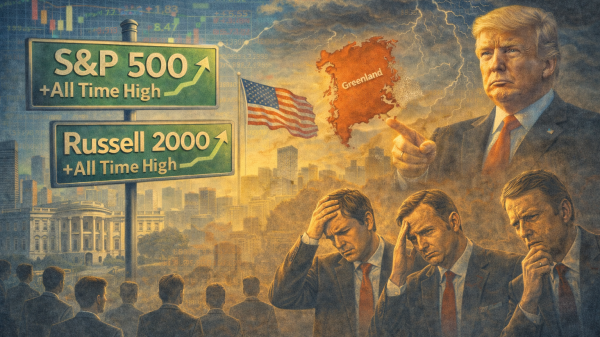
















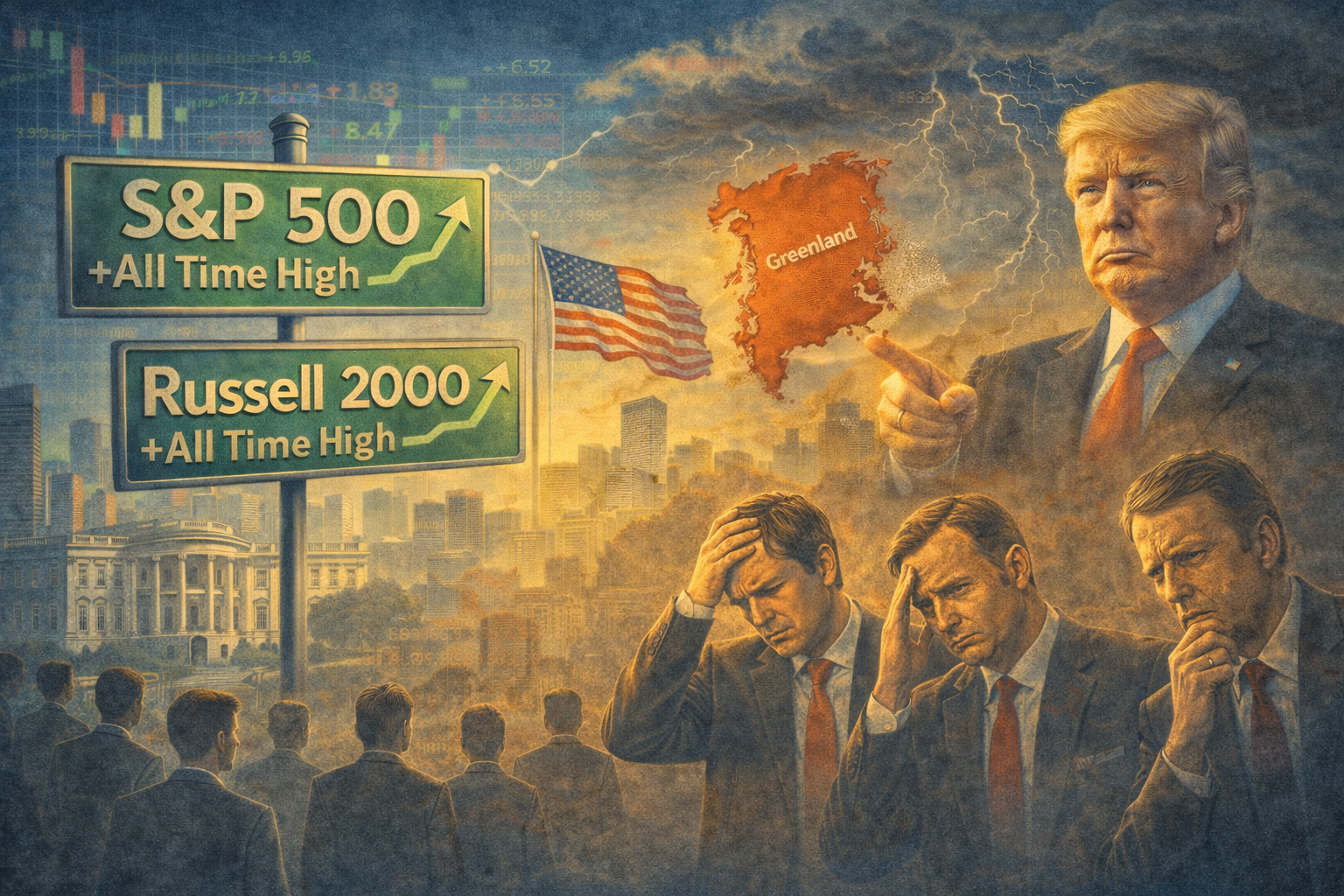
This time last week, the S&P 500 hit yet another all-time high, coming within a couple of points of 7,000.
Over the previous two months, the index had made a series of higher lows and higher highs.
Over the same period, the VIX index, a measure of S&P volatility, had declined steadily, falling back to levels indicative of investor complacency.
Some of the froth had been blown off the tech sector. Yet, rather than this triggering a rush out of stocks, investors were keen to reinvest the proceeds from their tech sales into overlooked corners of the US equity universe.
This helped push the Russell 2000, a broad-based index of small cap, domestically-focused US stocks, to record highs.
Investors rotated out of growth and into value. They maintained their faith in the US economy, or at least its corporate sector.
But then this optimism began to unravel. President Trump upped his push for a US takeover of Greenland.
Then he responded to objections from European leaders, and NATO allies, by threatening more tariffs on eight countries, including the UK, as a punishment for defying his demands.
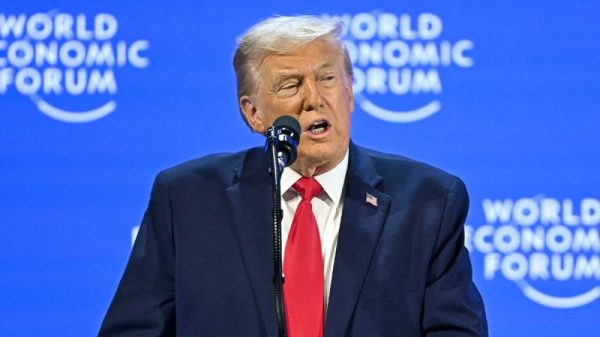
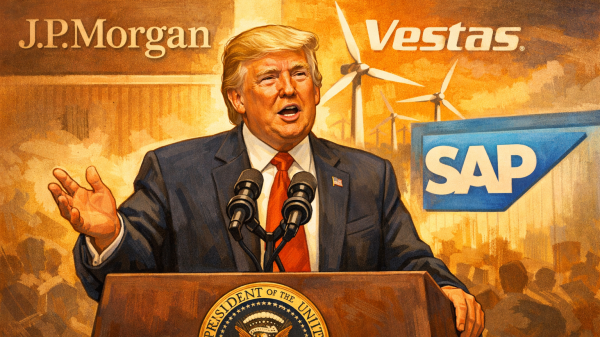
This all came as the gross and the foul flew to Davos for their annual freakshow. And this time, the US President put in an appearance as well.
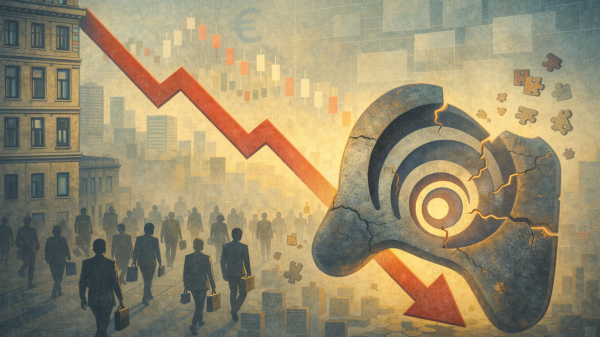
Ahead of his arrival, the S&P broke below 6,800 for an overall weekly loss of 3%. That’s not a huge move.
But it certainly rattled investor confidence. The fear was that Mr Trump would excoriate Europe’s leaders, and he said nothing to suggest this wouldn’t be the case.
Indeed, he began his address by insisting that Europe was heading in the wrong direction and had been for ten years, adding that the US wanted Europe to be ‘strong allies’.
But US stock indices responded by rallying sharply as he also ruled out military action over Greenland.
Mr Trump stated that he wanted immediate negotiations with Denmark to push for US ownership of Greenland, but repeated that he would not use force.
So with that brouhaha out of the way for now, let’s consider what investors are likely to focus on next.
Considering that President Trump has often been referred to as a ‘markets guy’, he has taken an incredibly interventionist approach to them.
Not content with taking a government stake in Intel, for instance, his latest wheezes include a plan to cap credit card interest rates at 10% for a year, and demanding that Fannie May and Freddie Mac buy up $200 billion in mortgage-backed securities with the aim of cutting housing costs.
But it’s his repeated damning of the Federal Reserve, and in particular its current Chair, Jerome Powell, which is proving most disruptive.
There are so many angles to this, but most come back to fears that the Fed may lose its independence, such as it is.
Mr Trump has just ruled out Kevin Hassett as his preferred choice as Mr Powell’s replacement when the latter stands down in May.
That has led to Kevin Warsh becoming the new frontrunner. If Mr Warsh takes over, then that could lead to significant changes for the Fed and the way it’s run.
These sound very encouraging, and look likely to boost transparency at the world’s most important central bank.
He is also no fan of quantitative easing, and that suggests a less ‘busy’ Fed when it comes to dealing with market disruptions.
If that’s the case, then investors should prepare for a step-up in market volatility over the coming years. Great for traders, less so for investors.
(David Morrison is a Senior Market Analyst at Trade Nation. Views are his own.)
The post All-time highs meet political risk in Trump’s America appeared first on Invezz