










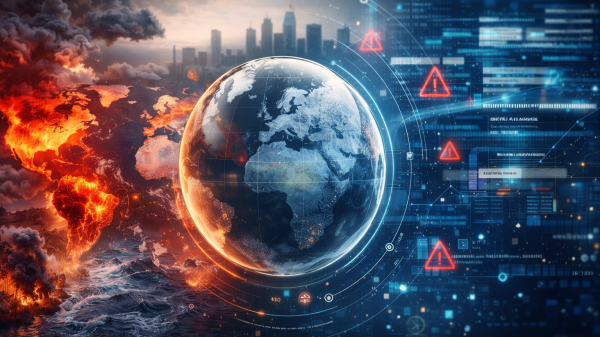



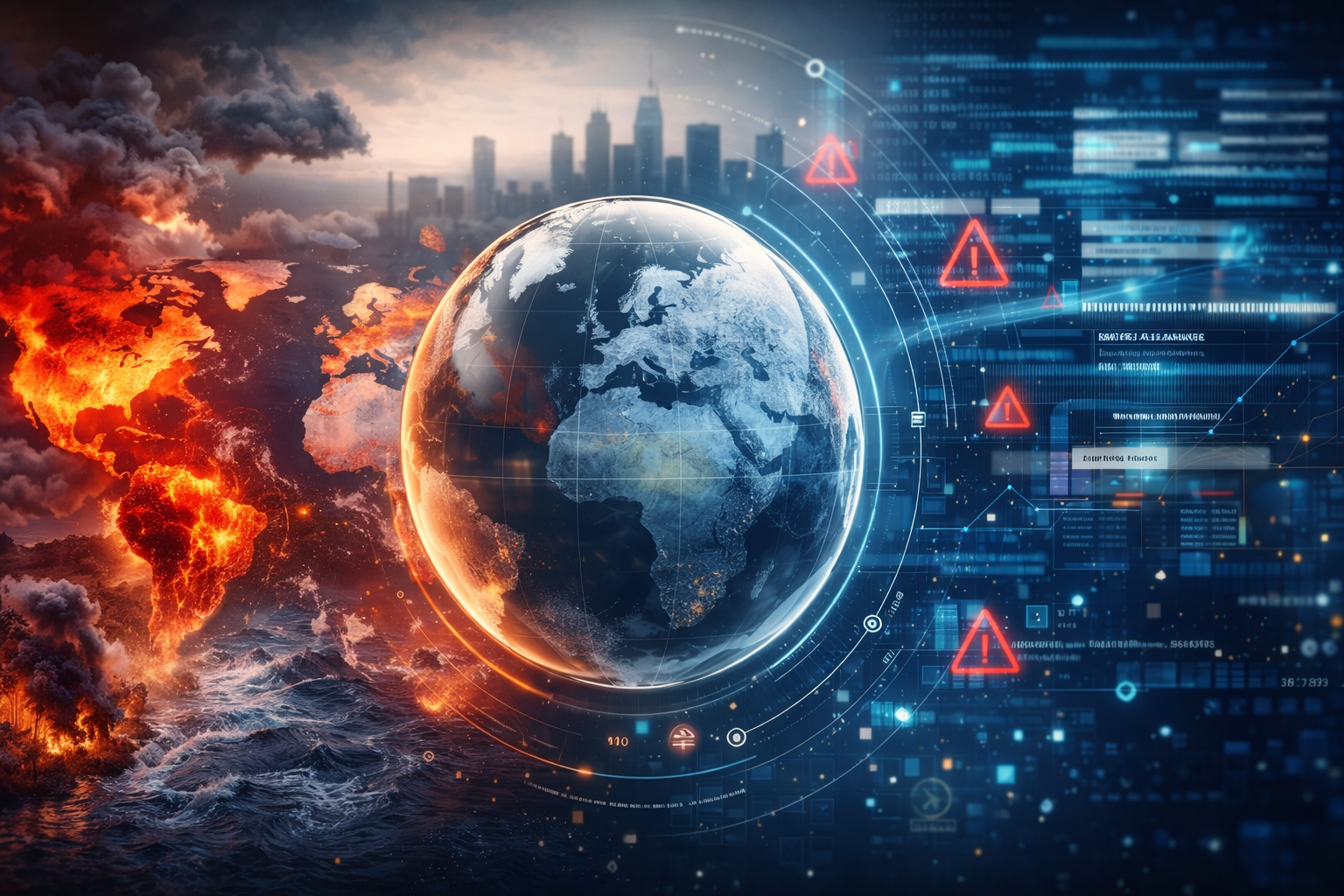
The World Economic Forum’s (WEF) latest Global Risks Perception Survey has issued a sobering assessment of the threats facing global markets and economies over the next decade.
Taken together, these risks could materially disrupt trade flows, destabilize supply chains, and depress global growth just as the world economy struggles with fragmentation and eroding institutional trust.
The World Economic Forum surveyed more than 900 global experts, spanning academia, business, government, international organizations, and civil society.
The survey was conducted between September and October 2024 to rank the severity of risks over two distinct horizons: the next two years and the next decade.
The methodology asks respondents to assess risks on a 1-7 severity scale, with a particular emphasis on identifying which threats pose the greatest material crisis risk to global GDP, population, and natural resources.
This year’s findings paint an increasingly fractured picture, with nearly two-thirds of respondents expecting a turbulent or stormy global outlook by 2035.
Short-term risks (2 years)
Misinformation and disinformation hold the top ranking for the second consecutive year, amplified by generative AI tools capable of producing false content at scale.
This erosion of truth undermines market confidence, shifts consumer behavior, and complicates policy coordination when swift action is needed.
Extreme weather events, from heatwaves and floods to hurricanes, rank second in the short term, directly damaging agriculture, infrastructure, and insurance markets.
Societal polarization continues to fracture societies, constraining policymakers’ ability to respond to crises and reducing investor certainty about governance stability.
Cyber espionage and warfare pose an immediate threat to operational systems and financial networks, raising compliance costs while exposing firms to data breaches.
Geoeconomic confrontation: tariffs, sanctions, and trade barriers have risen sharply in concern.
Protectionist policies threaten to fragment global supply chains, trigger inflation, and erode investment.
Eighty-eight percent of businesses already plan supply-chain reconfiguration in response to trade tensions.
Inequality, involuntary migration, human rights erosion, and pollution round out the top 10, each carrying immediate economic and social consequences.
WEF Global Risks 2025-26: Long-term threats (10 years)
The decade ahead is dominated by environmental hazards.
Extreme weather remains the top long-term risk, followed by critical change to Earth systems and biodiversity loss, which has surged from rank 37 in 2009 to rank 2 today.
Natural resource shortages constrain commodity supplies and fuel geopolitical competition, while misinformation continues eroding institutional trust necessary for coordinated action.
Adverse outcomes of AI technologies climb sharply in the 10-year ranking, reflecting risks in labor transitions and regulatory disruption.
Inequality, cyber threats, societal polarization, and pollution persist across both horizons, signaling that these fractures will deepen without decisive intervention.
The WEF’s Mirek Dušek warned that “the stakes have never been higher,” noting that widening divides are calling into question whether existing governance structures can tackle challenges collectively.
The report suggests that only through multilateral dialogue and coordinated action can leaders rebuild trust and strengthen economic resilience in the decade ahead.
The post 10 threats that could disrupt world economy next: WEF Global Risks 2025-26 appeared first on Invezz