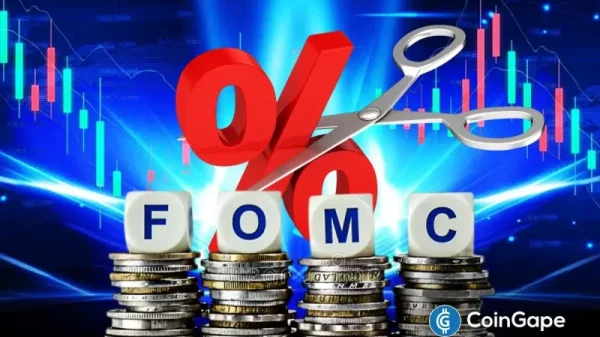








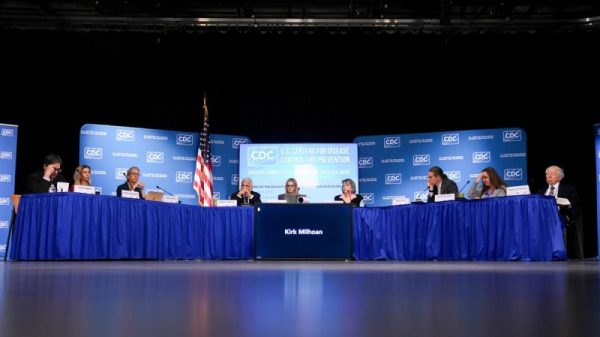








The Federal Reserve’s December 9-10 policy meeting is shaping up to be one of the most uncertain in years, as central bankers weigh another interest rate cut against the backdrop of missing economic data and persistent inflationary pressures.
The debate comes after the Federal Open Market Committee lowered rates in September and again in October, bringing the benchmark federal funds range to 3.75%-4.00%.
Another quarter-point cut would reduce the range to 3.50%-3.75%.
Wall Street sees high odds of a cut, but policymakers remain split
Bond markets are leaning decisively toward another reduction.
As of late this week, futures traders are assigning roughly an 87% chance of a 25-basis-point cut, according to the CME FedWatch tool.
A Reuters poll shows 82% of economists expect the same outcome.
But analysts warn that markets may be misreading the depth of internal disagreement at the Fed.
Recent public remarks from FOMC voting members reveal an uncommon split between officials who believe further easing is needed to support a cooling labor market and those who fear that lowering rates again could risk reigniting inflation.
“In the end, it’s a much closer call than what market pricing would suggest,” said Ryan Sweet, chief US economist at Oxford Economics, in a recent Morningstar report.
“The committee is clearly divided.”
At least five voting members have signaled opposition to another move in December, according to public comments.
Among them are officials concerned that inflation—while down sharply from its 2022 peak—remains above the central bank’s 2% target.
Data blackout adds to uncertainty
The debate is complicated by an unprecedented gap in official economic data.
The Bureau of Labor Statistics has confirmed that it will not publish October employment or inflation numbers because the figures were not collected during the recent 43-day government shutdown.
November data will only be available after the Fed convenes, with jobs data due on December 16 and inflation figures on December 18.
Minutes from the October 29 meeting show that “many” members were already leaning against another cut, and several officials indicated that the lack of reliable, up-to-date readings on inflation and hiring would make additional action harder to justify.
Fed Chair Jerome Powell has also cautioned that a December move is “far from a foregone conclusion.”
His remarks—and the divisions underscored in the minutes—briefly pushed market expectations much lower in mid-November, with pricing for a December cut falling to the equivalent of just seven basis points.
Doves argue for insurance as risks accumulate
Despite the uncertainty, a number of influential policymakers, including John Williams, Christopher Waller, Michelle Bowman, and Stephen Miran, have struck a more dovish tone in recent weeks.
They argue that one more reduction would help ensure the economy against a sharper slowdown, especially as hiring cools and consumer spending shows early signs of fatigue.
Some analysts expect this camp to prevail.
“Even with the data delays and cloudy outlook, it seems pretty clear that one more cut in December makes sense,” said Goldman Sachs economist Janice Rosner, who added that the Fed’s “risk-management exercise has come to a conclusion.”
A central question, however, is how Powell would frame any December move.
Analysts say he must balance signaling flexibility for further easing—if needed—against reassuring more hawkish colleagues and investors that the Fed is not easing prematurely.
Big banks shift forecasts after dovish signals
Major Wall Street institutions have begun aligning behind the likelihood of a December cut.
Morgan Stanley said on Friday it now expects the Federal Reserve to deliver a quarter-point rate cut in December, aligning its view with JP Morgan and BofA Global Research after a series of dovish signals from central bank officials.
All three brokerages had previously anticipated a hold.
The shift follows softer US data in late November and comments from key policymakers, including New York Fed President and FOMC Vice Chair John Williams, Governor Christopher Waller, and San Francisco Fed President Mary Daly, which have strengthened expectations of an imminent cut.
“It seems we jumped the gun,” Morgan Stanley strategists said.
We expect dissents, and Chair Powell will likely trade the cut for language changes in the statement that signal further cuts will have a higher bar.
The bank now forecasts an additional 25-basis-point reduction in January and April, bringing rates to a terminal range of 3.0%-3.25%.
This marks a revision from its earlier projection of cuts in January, April, and June.
Morgan Stanley expects Powell to signal that the “recalibration phase” of monetary policy is complete and that any future moves will be decided meeting by meeting and guided by incoming data.
JPMorgan, meanwhile, sees another cut in January, while BofA anticipates reductions in June and July next year.
The post Fed meeting preview: odds of a rate cut are high, but member splits, missing data cloud outlook appeared first on Invezz