











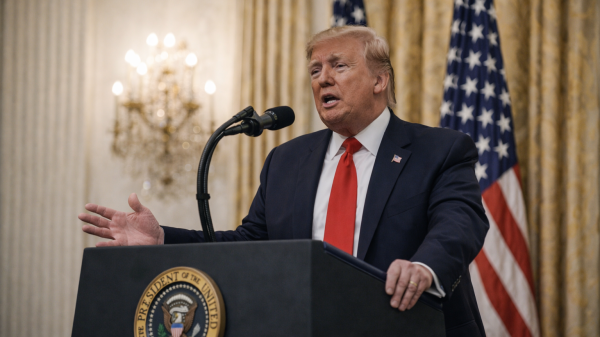





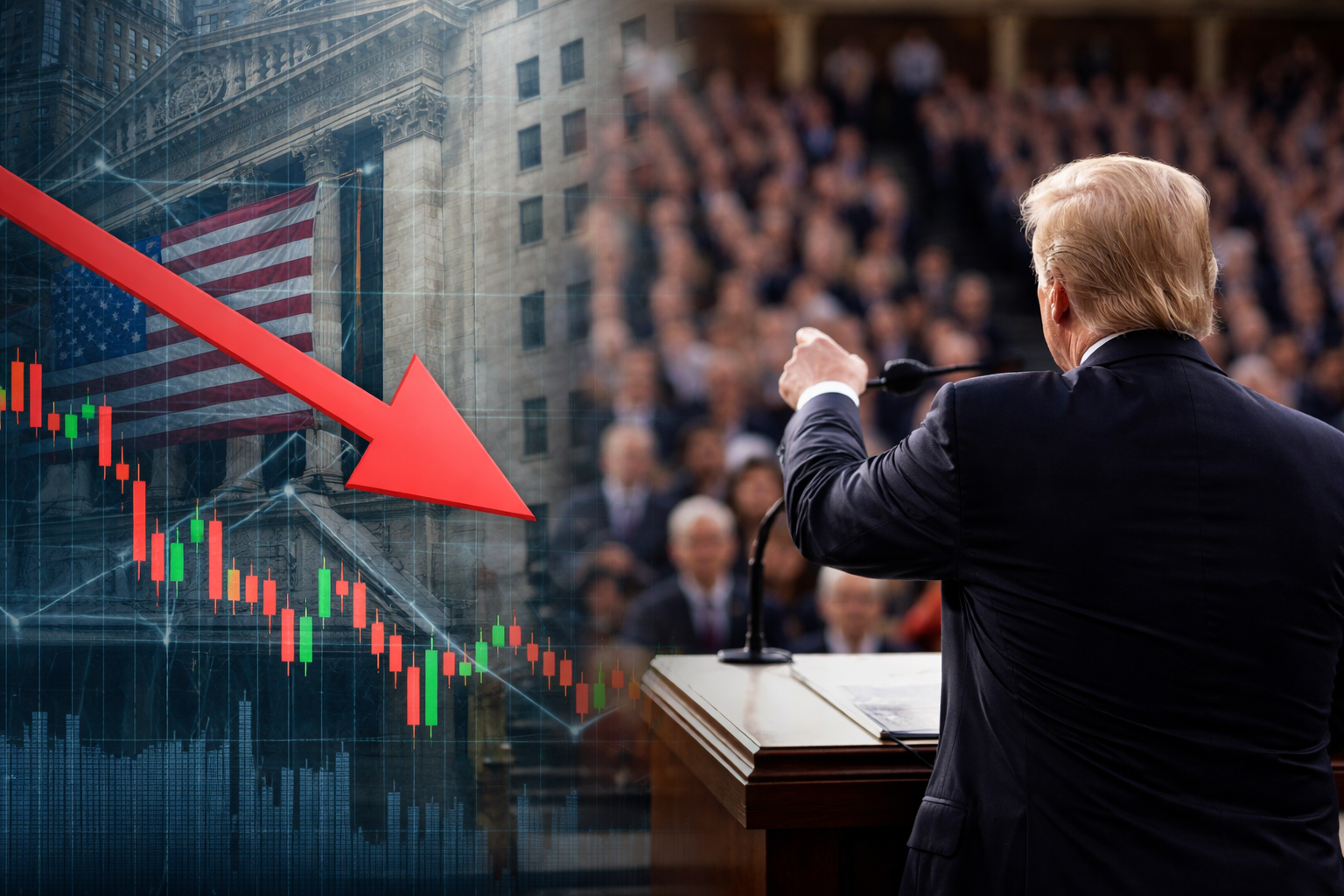
President Trump delivered the longest State of the Union address in modern history, which was just under 1 hour and 48 minutes.
He declared that America is “bigger, better, richer and stronger than ever before” and that “the roaring US economy is roaring like never before.”
The US president says one thing, the data says another, and voters have their own opinion.
Indeed, inflation is not rising, the US stock market is near record highs, and mortgage rates have eased.
But the president’s approval now sits below 40%. So why is there a disconnect?
A solid economy on paper
By conventional measures, the US economy is stable. Consumer price inflation ran between 2.4-2.7% in 2025, depending on the measure.
Core inflation on a three month annualised basis touched 1.7%. Gas prices have fallen from about $3.12 per gallon on Inauguration Day to roughly $2.95.
Mortgage rates are at their lowest average since 2022 as Treasury yields have declined.
Growth, however, slowed in the final quarter of last year. Job creation in 2025 totaled about 181,000 positions. Unemployment is slightly higher than a year ago.
The labor market differential compiled by the Conference Board, which measures the gap between people who say jobs are plentiful versus hard to get, has deteriorated.
None of this signals a collapsing economy, rather a cooling economy with firm asset markets and softer household momentum.
Why do voters feel worse than the data?
The answer lies in levels instead of rates. Inflation may be lower than in 2022, but grocery prices, rent, insurance and utilities remain high compared with where they were three years ago.
A 2.4% CPI increase still compounds on an already elevated base. For many households, that is the lived experience.
Polling captures this tension. Reuters and Ipsos show 40% approval for Trump’s handling of the economy. AP NORC finds 36%.
An average compiled by Cook Political Report puts overall approval at 41% with 57% disapproval.
An Economist YouGov survey shows 69% of respondents rate the economy as fair or poor, and half say it is getting worse.
That’s because investors often track inflation trends and earnings growth., while voters track rent checks and grocery receipts. Those two timelines are no longer aligned.
The promise gap
During the campaign, Trump promised lower grocery prices and sharply lower energy costs. In his State of the Union he declared the economy was roaring and said millions were gaining from rising markets and lower rates.
Though the rhetoric was expansive, the delivery has been more modest.
Inflation is down from its peak but food prices rose 2.4% in the first year of his second term. Mortgage costs have eased, though partly because bond markets price slower growth.
So in reality, the economy has not accelerated, it has decelerated from post pandemic highs.
The gap between promises and outcomes explains much of the anger.
The labor market is still holding up, yet affordability in housing and health care remains unresolved.
When expectations are set at one level and reality settles at another, approval ratings tend to follow the gap rather than the data.
Tariffs, courts and growth risk
Trade policy is central to how everyday people feel.
The Supreme Court struck down the most expansive part of Trump’s tariff regime.
The president called the decision unfortunate and pledged alternative mechanisms. He has continued to argue that tariffs are paid by foreign countries and could one day replace income taxes.
Most economic studies conclude that tariffs are largely borne by US firms and consumers. They function like a tax on imports.
Mortgage rates have fallen in part because Treasury yields declined on concerns about trade tensions and slower growth. In other words, some of the financial easing cited in the speech reflects caution in bond markets rather than renewed expansion.
For investors, this mix is complex. Equity markets respond to earnings and liquidity. Households respond to costs and job security.
Trade uncertainty can support bonds while capping business confidence. That divergence feeds into the broader perception gap.
When voters rewrite their own history
The most revealing data point may not be inflation or GDP but from survey methodology.
Pollsters who recorded actual 2024 vote choice immediately after the election now find that about 6% of verified Trump voters deny voting for him.
Among Trump voters who disapprove of his job performance, nearly one in four no longer admit to their original vote.
The pattern runs in both directions. Harris voters who now approve of Trump are more likely to claim they voted for him. Researchers describe this as preference reconciliation. People adjust their memory to align with current feelings.
This is more than statistical noise. When voters begin to distance themselves from an incumbent, it signals reputational erosion. Approval below 40 percent is one warning. Supporters rewriting their vote is another.
The midterm math
History shows that in 2010, Barack Obama entered midterms with a fragile recovery and lost more than 60 House seats.
Today Republicans hold a razor thin majority. Independent voters show disapproval rates above 60% in several surveys.
56% of voters in a Wall Street Journal poll say the president does not have the right priorities, and 58% disapprove of his handling of inflation.
State of the Union speeches rarely move numbers in a lasting way. They can clarify strategy. This one leaned heavily on optimism and patriotism rather than empathy. That approach energizes a base. It may not expand a coalition.
For investors, the risk is not recession in the immediate term. The risk is political constraint. A weak approval rating can limit fiscal flexibility, complicate trade policy and increase the odds of legislative gridlock after November.
Markets can thrive on stability, but they struggle with policy uncertainty and reactive governance.
The US economy is not in crisis. Yet belief in economic stewardship is eroding. When confidence falls faster than growth, politics tends to catch up with the data.
The post Trump calls it 'golden age', but grocery bills force voters to disagree appeared first on Invezz