
















Shares of US oil companies surged on Monday, a jump spurred by the potential to gain access to Venezuela’s massive oil reserves.
Shares of Chevron, the sole US major currently operating in Venezuela’s oil fields, saw a 6.5% jump in premarket trading, according to a Reuters report.
Meanwhile, refiners such as Marathon Petroleum, Phillips 66, Valero Energy, and PBF Energy also experienced significant gains, rising between 4% and 11%.
Market surge follows political shift
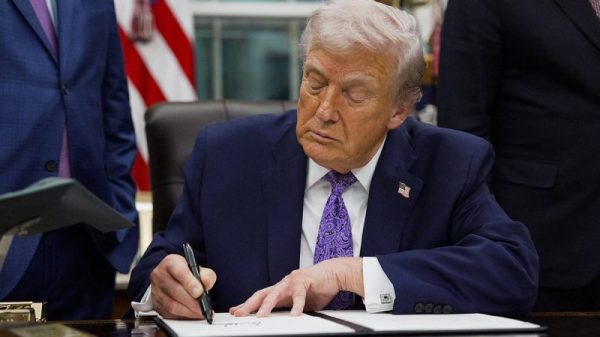
The gains followed President Donald Trump’s statement that the US would assume control of the South American country after its president was arrested.
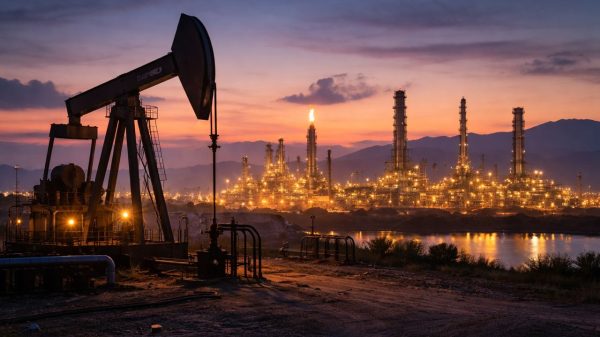
Despite holding the world’s largest oil reserves, Venezuela’s production has sharply declined in recent decades.
This drop is attributed to mismanagement, reduced foreign investment following the nationalization of its oil industry, and sanctions.
“We’re going to have our very large US oil companies, the biggest anywhere in the world, go in, spend billions of dollars, fix the badly broken infrastructure, oil infrastructure, and start making money for the country,” Trump was quoted as saying on Saturday, after American forces seized Venezuelan President Nicolas Maduro from Caracas.
Oil prices rose more than 1% over uncertainty surrounding Venezuelan oil flows. Prices had spent most of the day in the red as oversupply concerns had gripped the market.
The full embargo on all Venezuelan oil exports, according to Trump, will remain in place for the time being.
State of Venezuelan crude
Venezuelan crude is a heavy, sour oil characterized by its high sulfur content. This composition makes it well-suited for the production of diesel and heavier fuels.
However, this crude typically yields lower profit margins compared to other grades, especially those sourced from the Middle East.
Ahmad Assiri, research strategist at Pepperstone, was quoted in the Reuters report:
This type of crude aligns well with the configuration of US Gulf Coast refineries, which were historically designed to process such grades.
Chevron, due to its continued operation in Venezuela under a US waiver, is well-placed to be one of the first companies to benefit from any change in policy.
Simultaneously, refiners would profit from having greater access to heavy crude oil nearer to their facilities.
Return of assets
According to analysts at J.P. Morgan, the US move may also facilitate the return of assets that Venezuela had seized in 2007 during the time of the late leader, Hugo Chavez.
ConocoPhillips and Exxon Mobil, according to the analysts, have significant pending arbitration awards with a high likelihood of being recovered.
The optimism was reflected in the share prices, with a 5.5% increase for ConocoPhillips and a 3% rise for Exxon.
Shares in oilfield services companies, including Baker Hughes, Halliburton, and SLB, saw gains of 6.6% to 9%. The technology offered by these firms is considered vital for increasing Venezuela’s crude production.
The politically unstable environment, coupled with years of neglect in maintaining infrastructure and a lack of investments for many years, means any meaningful recovery would take time, according to analysts.
In the 1970s, Venezuela’s oil production reached 3.5 million barrels per day, representing over 7% of the world’s total output.
However, production declined significantly, falling below 2 million barrels per day in the 2010s. Last year, output averaged about 1.1 million barrels per day, accounting for roughly 1% of the global supply.
The post US oil stocks soar on potential access to Venezuela’s massive reserves appeared first on Invezz