





















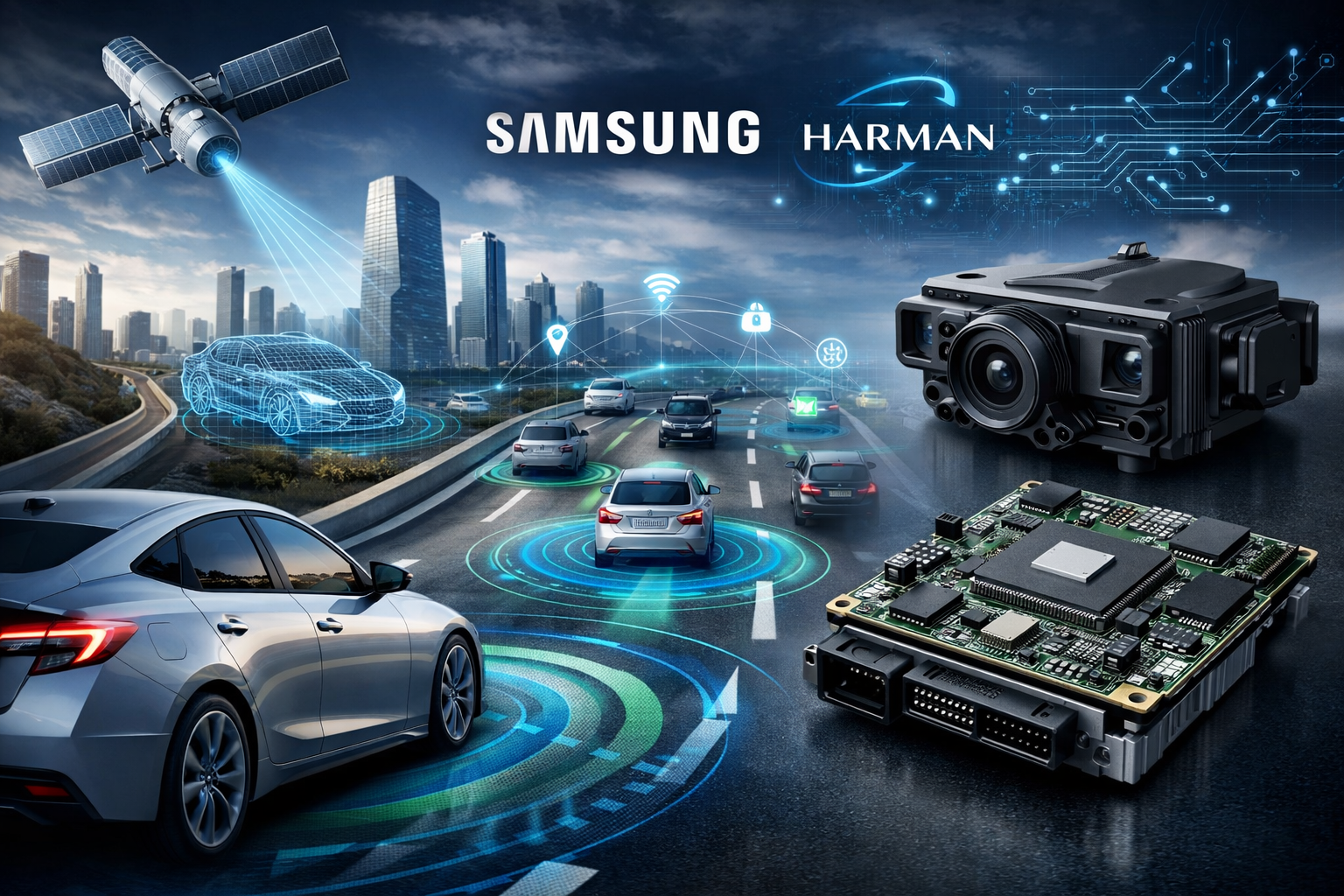
Harman International, owned by Samsung Electronics, is buying a key driver-assistance business from ZF Group in a €1.5 billion transaction that reflects mounting financial pressure across Europe’s auto-supplier sector.
The purchase brings radar, smart camera, and automotive computing operations under Harman at a time when suppliers are reassessing capital-intensive portfolios.
For Samsung, which bought Harman in 2017, the deal strengthens its automotive electronics strategy as vehicles shift toward software-defined architectures.
For ZF, the sale offers balance-sheet relief amid higher refinancing costs and weakening returns.
Samsung builds scale in software-defined vehicles
Harman has become Samsung’s spearhead in cars, supplying infotainment, audio, and connected-vehicle systems to global manufacturers.
Its brands include JBL, Harman Kardon, and Bang & Olufsen, and its customer base spans BMW AG, Volkswagen AG, and Volvo Car AB.
By combining Harman’s cockpit and in-car software expertise with ZF’s camera and radar capabilities, Samsung aims to secure a leading position in car-use smart cameras and advanced driver assistance systems (ADAS).
The group expects demand for ADAS and centralised controllers to expand rapidly over the next decade, driven by safety and convenience features embedded in software-led vehicle platforms.
ZF seeks breathing room
For ZF, a major supplier of gearboxes and safety electronics, the divestment provides financial flexibility as interest expenses rise and margins come under pressure.
The strain has contributed to job cuts, including within its electric-vehicle division, highlighting the challenges facing German suppliers as the EV transition slows and competition from Chinese manufacturers intensifies.
Despite the sale, ZF retains a broad ADAS footprint built around sensors, cameras, radar, and software that enable features such as adaptive cruise control, automated emergency braking, and lane-keeping assistance, all aligned with software-defined vehicle architectures.
Sector stress drives dealmaking
The transaction underscores a wider retreat by European automotive groups from cutting-edge, capital-heavy technologies as returns become harder to justify.
High development costs, fierce competition from Chinese rivals and global technology firms, and uncertain payoffs are reshaping investment priorities, even as demand for traditional combustion-engine components is expected to wane.
Experts note that consolidation is accelerating as suppliers prioritise cash flow and focus.
Automakers increasingly favour fewer partners to deliver integrated hardware and software stacks.
This shift benefits technology-led groups like Samsung, while traditional component makers reassess risk, scale, and long-term investment commitments across rapidly evolving vehicle platforms.
The pressure is visible across Germany’s auto sector, which has shed close to 50,000 jobs this year, with suppliers the fastest-shrinking segment, according to Destatis.
Insolvencies among automotive companies reached a record last year, based on data going back to 2010.
Since Samsung’s acquisition, Harman has operated as a standalone subsidiary, doubling revenue in part through the acquisition of 10 companies, reinforcing its role at the centre of Samsung’s automotive ambitions.
The post Samsung’s Harman to acquire driver assistance arm from ZF Group appeared first on Invezz